
-
Menu
-
Home
-
Photo of the week
-
Featured gallery
-
Favorites
-
Recent photographs
-
About
-
Contact
-
Tech specs
When people think of Indigo Buntings they typically picture a deep blue bird singing from a tall plant or tree. That’s how the male Indigo Bunting looks when sporting its breeding plumage during spring and summer.
One of my favorite bird information websites (All About Birds) says the male Indigo Bunting in breeding plumage “looks like a scrap of sky with wings.”
It’s hard to come up with a better description than that.
But the birds aren’t quite as flashy the rest of the year.
During the fall and winter months, the adult male has plumage similar to the year-round plumage of the female Indigo Bunting — dark brown upper parts and lighter brown beneath — although the male can retain some blue feathers year-round.
I found this male Indigo Bunting in fall plumage feeding in a field on a September morning. I knew it was a male and not the similarly colored female because of the blue tinges remaining on feathers on parts of the wings and tail. The females have no blue.
Indigo Buntings are somewhat solitary birds during breeding season, typically spending summer days in or near weedy fields, singing from the tallest plant or tree they can find. The birds form large flocks during migration and during the winter. This bird seems to be making the transition from breeding to winter behavior. It’s already lost its breeding plumage but was still hanging out alone and singing from tall plants.
I liked how the bird and its perch was isolated from the background in the photo. The bunting had selected a perch higher than surrounding plants, allowing the distant sky and trees to dissolve into a nice blue-to-green gradient.
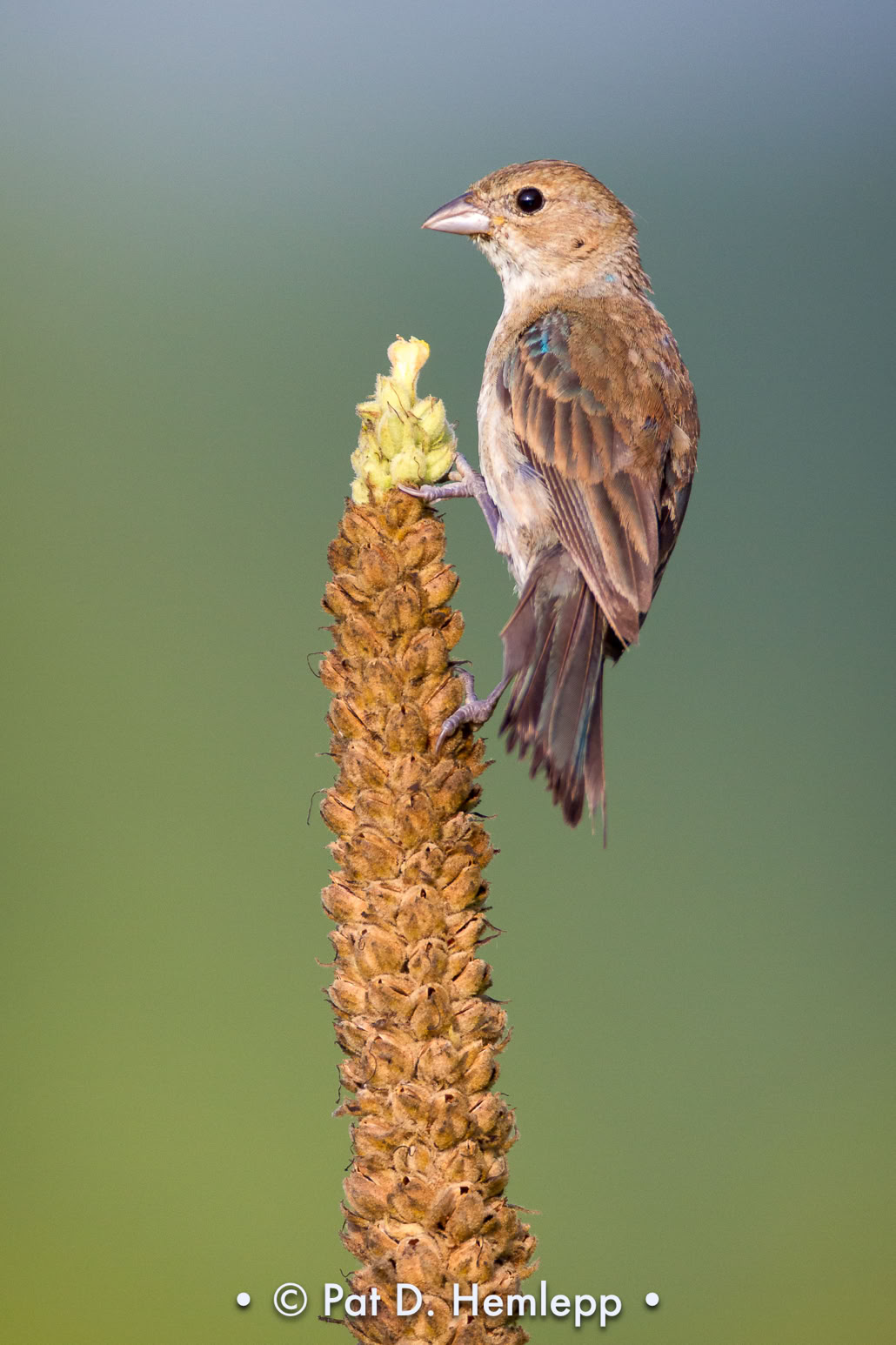
A male Indigo Bunting in non-breeding plumage perges in a field in Sharon Woods Metro Park, Westerville, Ohio.